
You ran a 360 assessment last quarter. The reports came back. Managers glanced at their scores, filed the PDFs somewhere, and went back to exactly what they were doing before. Sound familiar?
The problem isn’t the assessment itself. It’s that most organizations treat assessment as a destination when it should be a starting point. They collect data about where people are, then do very little to help them get somewhere better. That gap between measurement and development is where most assessment programs lose their value.
What should an assessment tool actually do for your team?
Before comparing specific tools, it’s worth getting clear on what you’re actually buying. Assessment tools for learning fall into three categories, and mixing them up leads to expensive disappointment.
Measurement tools tell you where people stand. They’re great at generating data, dashboards, and reports. Think survey platforms and 360 feedback systems. They answer “what is.”
Development tools connect assessment data to growth. They don’t just identify a gap; they create a path to close it through coaching, personalized learning, or structured practice. They answer “what next.”
Performance management tools integrate assessment into the broader HR cycle. They connect feedback to goals, reviews, and compensation decisions. They answer “how does this fit.”
Most L&D teams need all three, but not necessarily from the same vendor. The mistake is buying a measurement tool and expecting it to drive development, or buying a development platform and expecting it to satisfy your CHRO’s performance review requirements.
How do you pick the right assessment tool?
Here’s a framework that cuts through vendor marketing:
| Question | If Your Answer Is… | Look For |
|---|---|---|
| What’s the primary goal? | Identify skill gaps | Skills-based assessment with gap analysis |
| What’s the primary goal? | Drive behavior change | Coaching-integrated platform |
| What’s the primary goal? | Standardize performance reviews | HR-integrated performance suite |
| How large is your team? | Under 50 | Lightweight, low-admin tools |
| How large is your team? | 50 to 500 | Scalable with department-level analytics |
| How large is your team? | 500+ | Enterprise integration, SSO, custom reporting |
| What’s your budget model? | Per-user monthly | SaaS platforms with flexible contracts |
| What’s your budget model? | Annual L&D budget | Platforms with annual licensing |
| Do you need ongoing coaching? | Yes | AI coaching + assessment combo |
| Do you need ongoing coaching? | No | Point-in-time assessment tools |
The right tool depends on where you are in your L&D maturity. Organizations just starting out with structured development need simplicity. Mature L&D teams need depth and integration.
Top assessment tools for learning and development
With that framework in mind, here’s how the leading tools stack up.
1. Risely
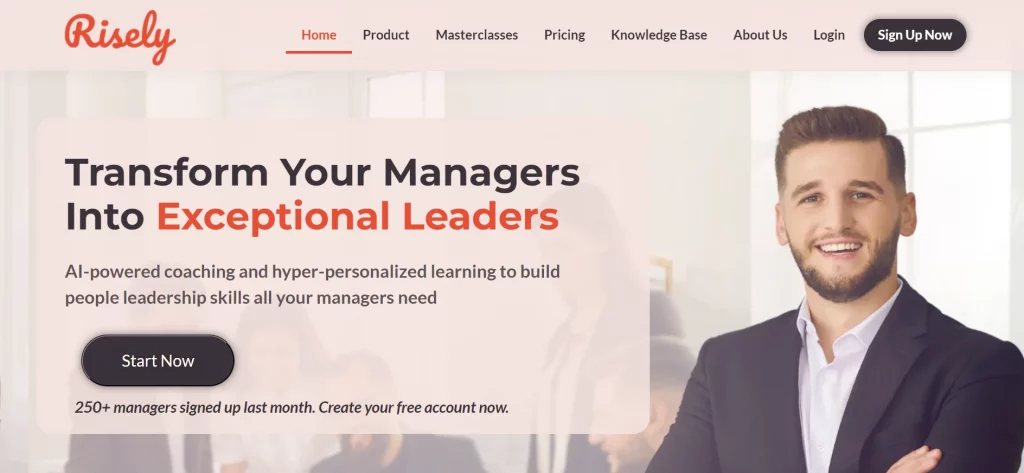
Risely takes a fundamentally different approach to assessment. Instead of treating it as a periodic event, Risely integrates assessment into an ongoing coaching journey. The platform assesses 83 workplace skills through self-assessments and team feedback, then connects those results directly to personalized coaching with AI coach Merlin.
What makes it different:
- Assessment that drives action. Skill scores aren’t just numbers on a dashboard. They feed directly into coaching conversations where Merlin helps people work on their specific gaps through practice and reflection.
- Team feedback built in. Managers get multi-rater feedback from their team members, creating a fuller picture than self-assessment alone.
- Continuous, not periodic. Rather than annual 360s, Risely creates an ongoing development cycle where assessment, coaching, and practice happen continuously.
- 83 skills across people skills and leadership. Coverage goes well beyond the typical 10 to 15 competency frameworks most tools offer.
Best for: Organizations that want assessment to directly drive skill development, not just generate reports.
2. Qualtrics
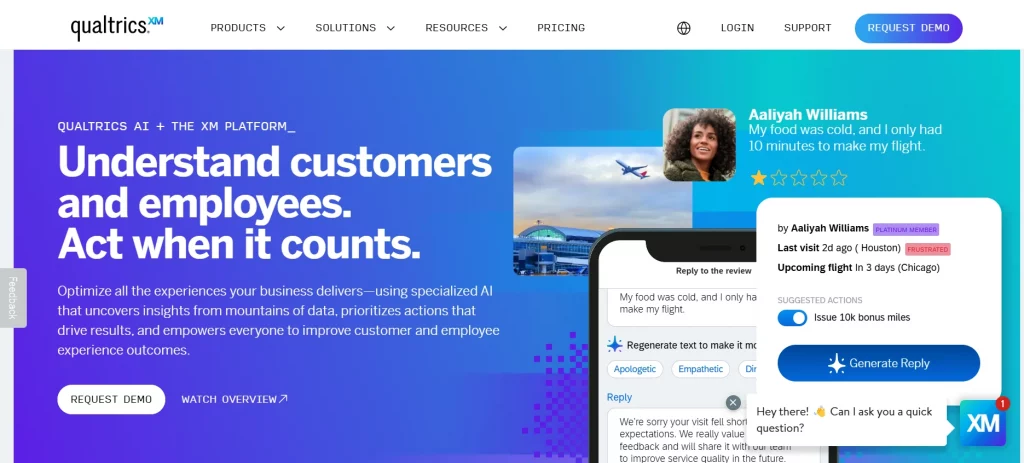
Qualtrics is the survey powerhouse of the assessment world. If you need sophisticated data collection with powerful analytics, it delivers. The platform handles everything from engagement surveys to 360 feedback with enterprise-grade reporting.
Strengths:
- Highly customizable survey design for any assessment need
- Advanced analytics that connect feedback to business metrics
- Strong confidentiality controls that encourage honest responses
Limitations: Qualtrics excels at gathering and analyzing data, but the development piece is on you. It tells you where the gaps are; it doesn’t close them.
Best for: Large organizations needing sophisticated measurement and analytics.
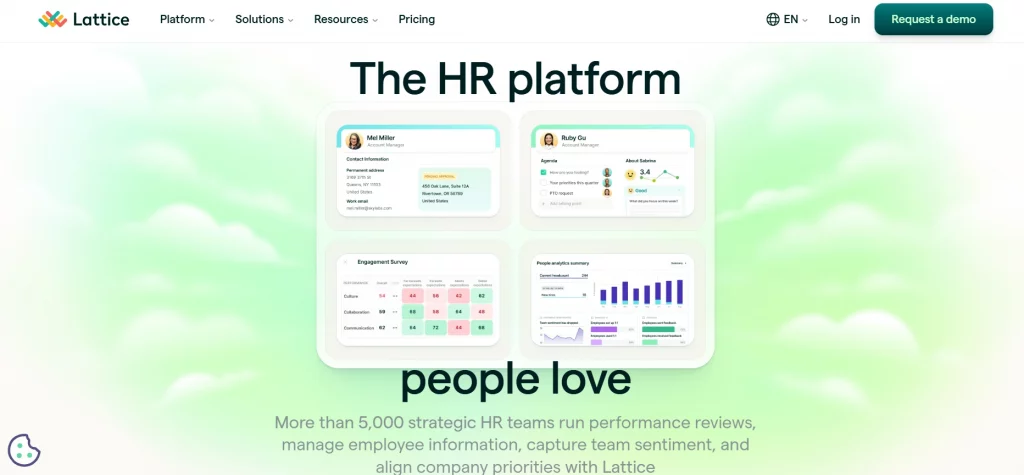
3. Lattice
Lattice connects performance management, engagement, and development in a single platform. For L&D teams that need assessment to feed into the broader HR cycle, it’s a strong choice.
Strengths:
- Integrates 360 feedback with goal-setting and performance reviews
- Manager tools like auto-suggested agendas and structured check-ins
- Strong HR operations features that reduce admin overhead
Limitations: Development features are more structured than personalized. Works best when you already have a clear competency framework to build from.
Best for: Organizations wanting assessment embedded in their performance management cycle.
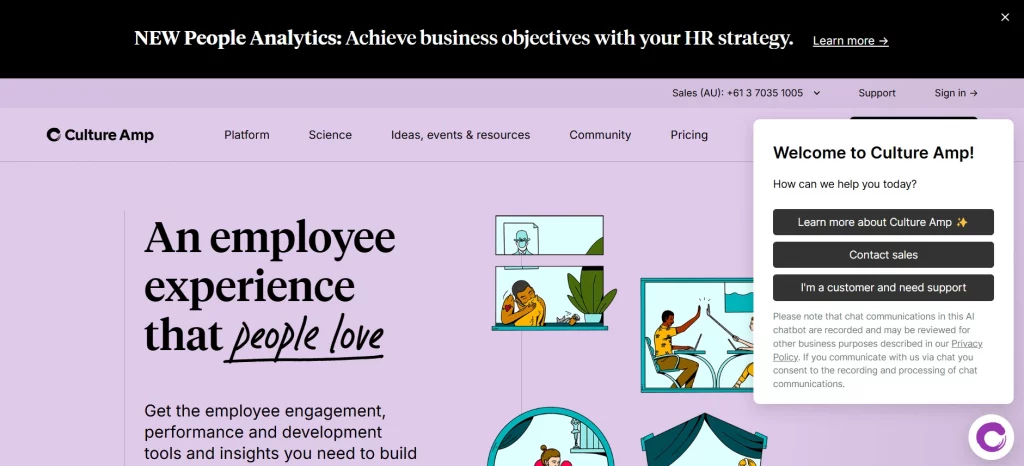
4. Culture Amp
Culture Amp leads with values and culture, making it a fit for organizations where engagement and belonging are top priorities alongside skill development.
Strengths:
- People analytics that connect engagement, development, and retention data
- Strong emphasis on building feedback culture
- Personalized development tools tied to growth goals
Limitations: More engagement-focused than skills-focused. If your primary need is technical or leadership skill assessment, you may need a complementary tool.
Best for: Culture-driven organizations where engagement and development go hand in hand.
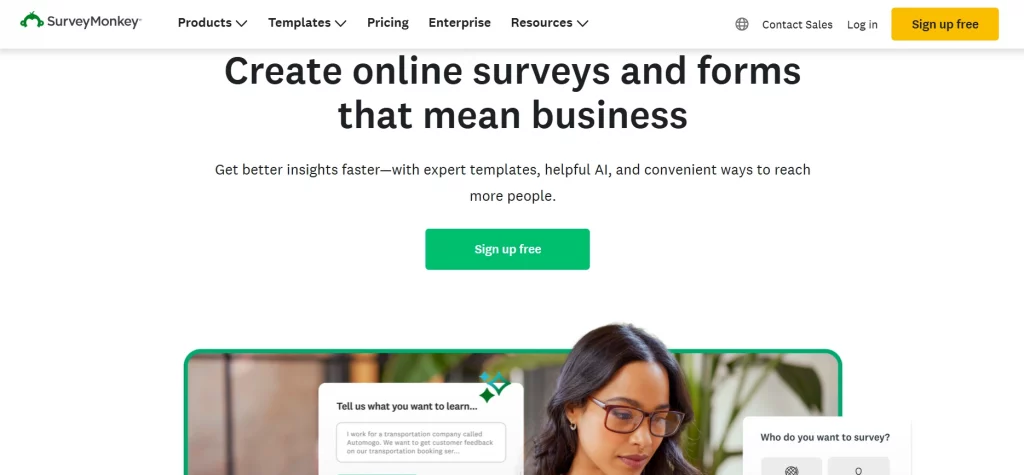
5. SurveyMonkey Enterprise
SurveyMonkey Enterprise is the accessible option for teams that need solid feedback collection without enterprise complexity. Pre-built templates and AI assistance make it fast to deploy.
Strengths:
- Low learning curve with pre-built assessment templates
- Multi-survey dashboards for tracking trends over time
- Scalable feedback programs across channels (including offline and SMS)
Limitations: More of a data collection tool than a development platform. You’ll need to build the development response separately.
Best for: Mid-size teams that need straightforward feedback collection at a reasonable price.
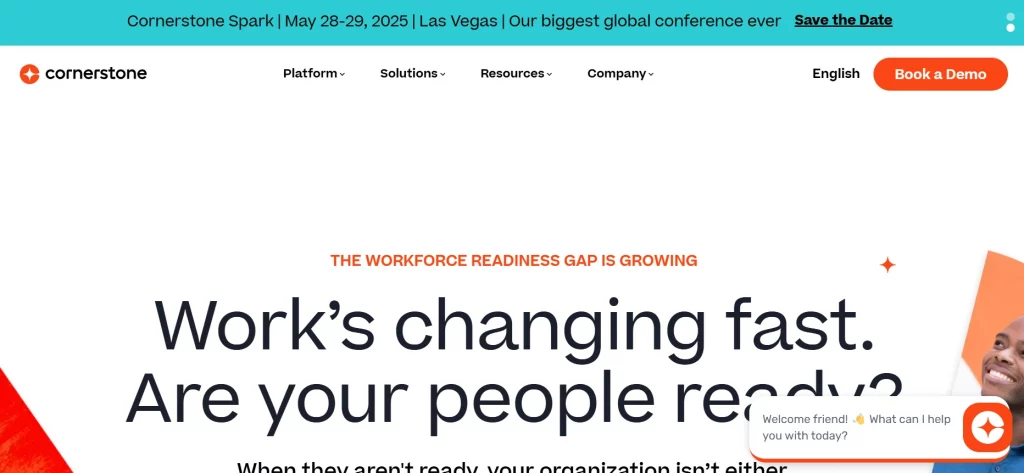
6. Cornerstone OnDemand
Cornerstone focuses on workforce readiness and agility. Its learning paths connect assessment results to structured skill-building programs.
Strengths:
- Customizable learning paths tied to assessment results
- Cross-device accessibility for distributed teams
- Workforce agility tools that identify readiness gaps proactively
Best for: Large enterprises focused on closing workforce readiness gaps at scale.
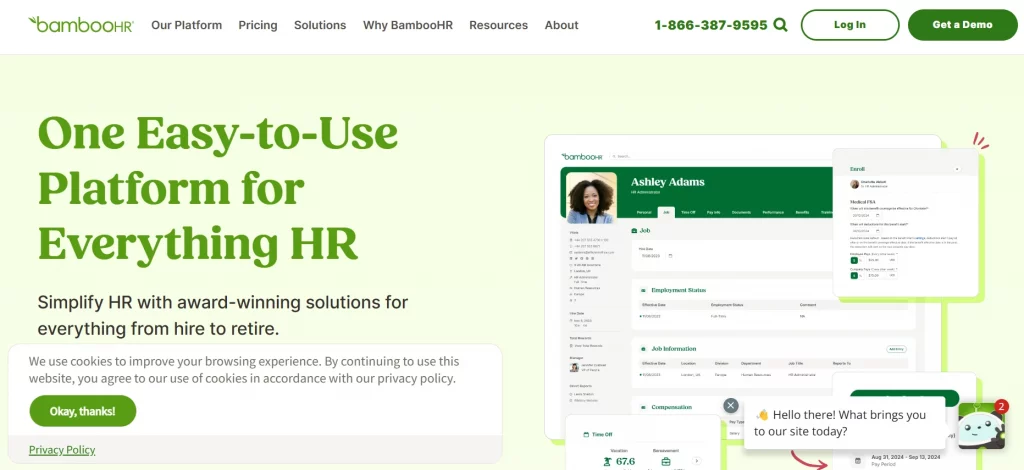
7. BambooHR
BambooHR is the all-in-one HR platform that includes assessment as part of a broader employee lifecycle solution. It’s not an assessment specialist, but it covers the basics well.
Strengths:
- Complete HR lifecycle coverage from hiring to development
- Customizable assessments tied to development plans
- User-friendly design that non-technical HR teams appreciate
Best for: Small to mid-size organizations wanting assessment within their existing HR platform.
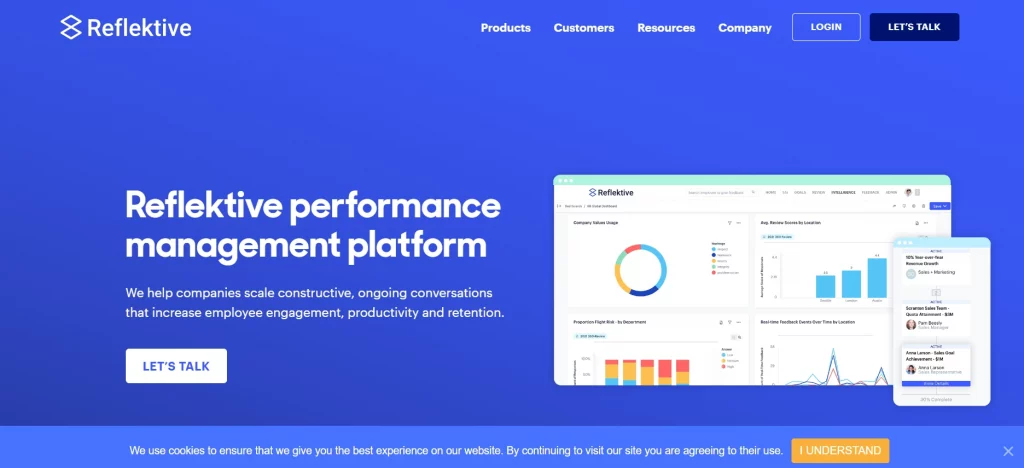
8. Reflektive
Reflektive emphasizes continuous conversations over periodic reviews. Its approach treats feedback as an ongoing practice rather than a quarterly event.
Strengths:
- Real-time feedback and public recognition features
- Custom assessments with proactive intervention alerts
- HRIS integration for comprehensive performance insights
Best for: Organizations transitioning from annual reviews to continuous feedback culture.
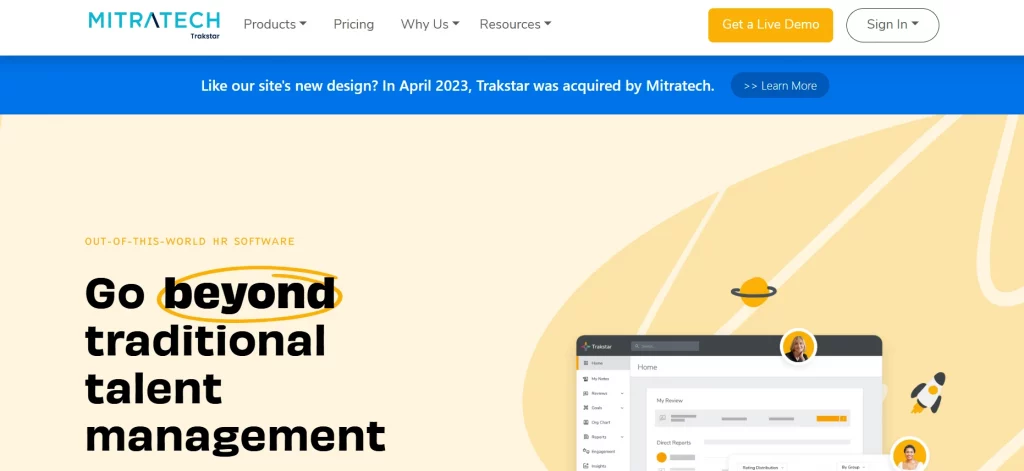
9. Trakstar
Trakstar connects every stage of the employee lifecycle, with assessment feeding directly into development planning and performance tracking.
Strengths:
- Detailed assessments aligned with departmental needs
- Multi-device accessibility for high participation
- Analytics that connect assessment to engagement and retention outcomes
Best for: Organizations wanting assessment integrated into the full employee lifecycle.
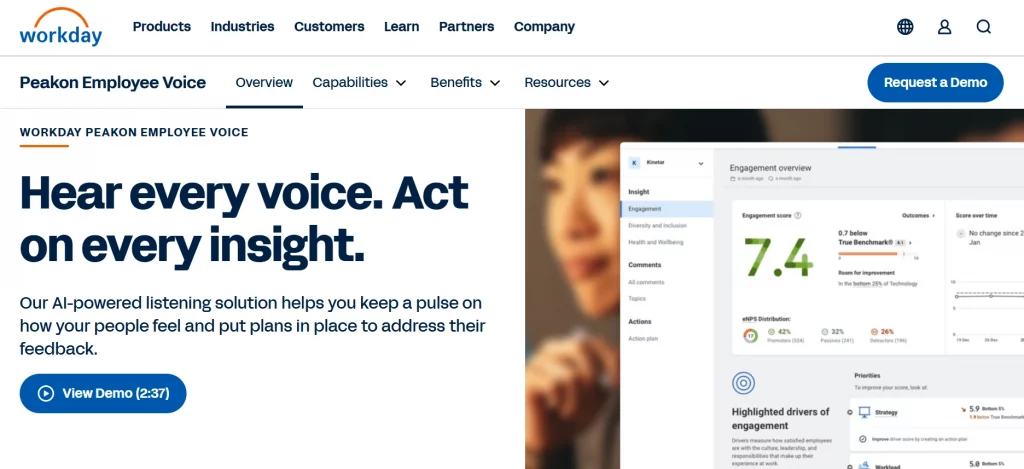
10. Peakon (by Workday)
Peakon combines employee listening with performance data to give L&D teams a comprehensive view of engagement, skill gaps, and turnover risk.
Strengths:
- Real-time engagement insights with turnover prediction
- Diverse assessment techniques for comprehensive capability views
- Tailored growth plans aligned with organizational goals
Best for: Enterprise organizations wanting to connect engagement data with development strategy.
How do you make assessment actually drive development?
Picking the right tool matters, but the real differentiator is what happens after the assessment. The practices below separate organizations where assessment creates change from those where it generates shelf-ware.
Close the loop within 48 hours. When someone completes an assessment, they should receive actionable next steps within two days. The longer the gap between data and action, the less impact the assessment has.
Make it about the individual, not just the org. Aggregate data helps L&D plan programs. Individual data helps people grow. Both matter, but most organizations over-index on the aggregate view and under-invest in the personal development response.
Connect assessment to practice, not just awareness. Knowing you scored low on “giving feedback” is mildly interesting. Practicing a difficult feedback conversation with an AI coach and getting real-time guidance is actually useful. The tools that connect assessment to practice (like Risely’s approach of linking skill scores to coaching conversations with Merlin) close more gaps than those that stop at awareness.
Reassess regularly. Annual assessments are snapshots. Quarterly or continuous assessment tracks whether development efforts are working. If someone’s feedback skills haven’t improved after three months of coaching, you need to adjust the approach, not wait for next year’s 360.
The best assessment programs treat measurement as one step in a continuous cycle: assess, develop, practice, reassess. When you choose your tools with this cycle in mind, assessment stops being an HR exercise and starts being a genuine driver of growth.
Related reading: