

Ever feel like you’re managing a team scattered across the globe, each member battling the allure of the fridge (or the laundry pile) instead of their to-do list? You’re not alone. The remote work revolution has brought exceptional flexibility, but it’s also presented a new challenge for managers: keeping teams engaged and productive in a world of distractions.
Think about it: we all know the struggle of staying focused at the kitchen table when that pile of dishes beckons or the frustration of feeling disconnected from colleagues who are just a video call away. So, how do we bridge that gap and create a thriving remote team environment? Let’s dive into why and how to motivate your remote team, turning those scattered individuals into a collaborative powerhouse.
Why is Motivating Remote Teams Crucial for Employee Engagement?
Imagine this: you wake up, roll over to your laptop, and dive into work. But as the day progresses, that initial focus starts to wane. The allure of the couch, the never-ending cycle of laundry, the siren song of the fridge—all these things compete for your attention in your familiar home environment.
This, my friend, is the reality for many remote workers. While remote work offers incredible flexibility and freedom, it presents a unique challenge for employees and managers: staying engaged and motivated. But employee engagement isn’t just a fluffy HR term. It’s the key that unlocks a treasure chest of benefits for individuals and organizations.
So, why is motivating remote teams crucial for employee engagement? Here’s the breakdown:
- Disconnection Blues: Remote work can sometimes feel isolating. Without the daily water cooler chats or spontaneous brainstorming sessions, employees can easily feel like cogs in a machine, disconnected from the bigger picture and their colleagues. The low engagement follows closely behind.
- Motivation Meltdown: Working from home means facing distractions head-on. That overflowing laundry basket is suddenly an urgent task. The midday Netflix temptation is too real. Without a clear separation between work and personal life and the natural motivation that comes from a physical workplace, focus and drive can easily dwindle.
- Performance Plop: Disengaged employees are less productive, plain and simple. Studies show a strong correlation between employee engagement and key performance indicators like sales, customer satisfaction, and innovation. The company can feel the slump when your remote team isn’t motivated.
But here’s the good news: prioritizing motivation can unlock a new level of engagement for your remote team. When your team feels valued, connected, and empowered, they’ll be more likely to bring their A-game every day – even when the coach calls their name.
Check out “Learn about 5 Ways to Increase Intrinsic Motivation at Work”
The Role of Motivation in Remote Team Management
Motivating remote teams is crucial for maintaining employee engagement, as remote work can often lead to feelings of isolation and disengagement among team members. Therefore, virtual motivation is pivotal in keeping remote teams engaged and productive. Managers have several strategies, such as setting clear goals, providing regular feedback and recognition, offering development opportunities, and promoting work-life balance.
Check out “Are your motivation problems holding you back? Here’s how to fix them ”
Effective communication is also paramount for maintaining virtual motivation and engagement in remote teams. Managers prioritizing motivation can create a positive work culture that fosters employee satisfaction, retention, and success. In addition, managers can significantly enhance employee engagement despite the challenges posed by remote work by ensuring their team members feel valued, supported, and connected to the company’s mission even when working remotely.
Challenges to Team Working Remotely
If you’re working on a motivating remote teams, you may be experiencing some unique challenges that can impact your ability to collaborate and be productive. Here are some common challenges that remote teams face:
- Communication: Communication is critical for remote teams. Without face-to-face interactions, staying in touch and ensuring everyone is on the same page can be challenging.
- Trust: Remote teams require high trust between team members and managers. It can be challenging to build and maintain trust without regular face-to-face interactions.
- Distractions: Working remotely can lead to distractions, such as household chores, family members, or pets. These distractions can impact productivity and make it challenging to stay focused.
- Isolation: Remote work can be isolating, primarily if team members are in different time zones or have limited interaction with other team members.
- Technology: Technology is critical for remote teams but can also present challenges. Technical issues or limited access to technology can impact productivity and communication.
- Time management: Remote work offers flexibility but requires strong time management skills. Establishing a work-life balance can be difficult without regular office hours.
- Collaboration: Collaboration can be challenging for remote teams. Working in different locations can make collaborating on projects and sharing ideas difficult.
- Misunderstandings: Misunderstandings can occur more quickly in remote teams due to communication barriers and lack of context.
Check out “Are your motivation problems holding you back? Here’s how to fix them ”
By being aware of these challenges, you can better motivate remote teams can take steps to address them and improve collaboration and productivity. In addition, effective communication, trust-building, and time management are critical for remote team success.
Check out “Boosting employee morale: The power of employee encouragement in the workplace”
10 Best Strategies for Motivating Remote Teams
We’ve established that a motivating remote teams is a happy, productive team. But how do you translate that “motivation magic” into actionable steps? Here are 10 strategies to keep your remote crew fired up and feeling like a cohesive unit:
1. Foster Strong Relationships: Remote work can feel isolating. Combat this by taking the time to build genuine connections with your team members. This isn’t just about work – ask about their hobbies, families, or weekend plans. Schedule virtual coffee chats or team lunches to connect on a personal level. These connections build trust and a sense of belonging, fostering a more engaged team.
2. Set Expectations: Ever feel frustrated when a project goes off track? Clear expectations are key! Set S.M.A.R.T. goals (Specific, Measurable, Achievable, Relevant, and Time-bound) for your team members and outline project deadlines. Ensure everyone understands their roles and responsibilities – ambiguity breeds confusion and demotivation. Regular check-ins can help identify any roadblocks and keep everyone on the same page.
3. Provide Support and Resources: Imagine feeling lost at sea without a paddle—that’s how unsupported remote workers can feel. Equip your team with the resources they need to succeed, such as training programs, project management tools, or access to industry experts. Offer regular feedback and guidance, letting them know you’re there to support their growth.
4. Open Communication: Silence doesn’t always equal consent (or productivity!). Encourage open communication within your team by setting up communication channels like Slack or video conferencing platforms where team members can easily share ideas, ask questions, and collaborate on projects. This fosters a sense of community and keeps everyone informed.
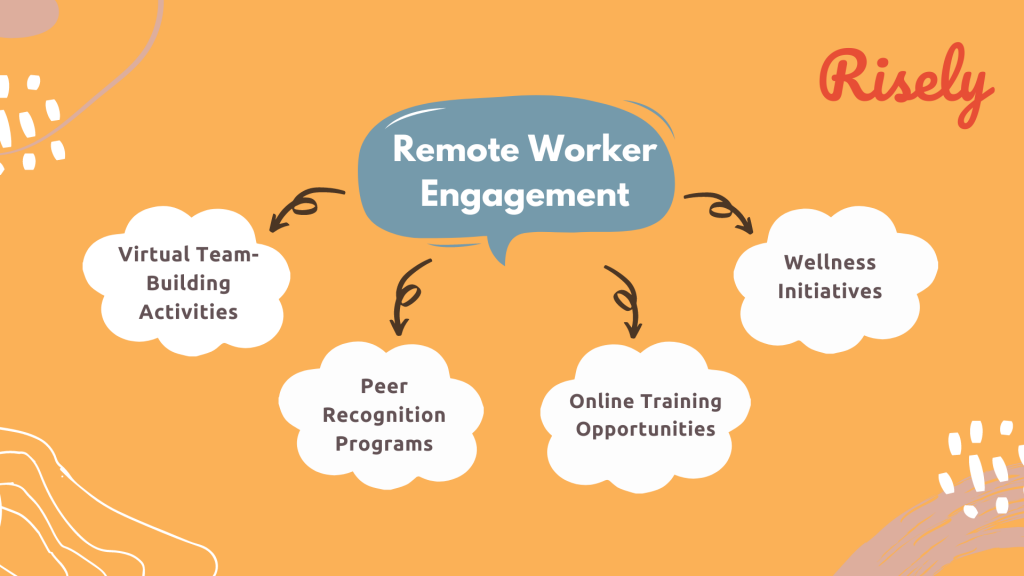
5. Foster Team Building: Remote teams can miss the camaraderie of a physical workplace. Combat isolation with virtual team-building activities. Schedule regular “coffee breaks” where team members can chat casually or organize online games or virtual escape rooms. These activities can be fun to break the ice, boost morale, and encourage collaboration.
6.Acknowledge Successes: Recognition is a powerful motivator. Don’t let accomplishments go unnoticed, no matter how big or small. Publicly acknowledge team members who go the extra mile, exceeding expectations. Consider offering rewards or incentives for exceptional performance. Feeling valued is a surefire way to keep your team motivated and engaged.
7. Embrace Flexibility: Remote work is all about flexibility. Empower your team by offering flexible work arrangements, such as flexible work hours, the ability to work from different locations, or even compressed workweeks. A healthy work-life balance prevents burnout and keeps motivation levels high.
8. Provide Opportunities for Growth: Stagnation is the enemy of motivation. Show your team you’re invested in their long-term growth by offering career development opportunities, such as training programs, mentorship opportunities, or the chance to take on additional responsibilities. Helping your team members develop new skills keeps them engaged and excited about their future with the company.
9. Foster a Positive Work Culture: Company culture matters – even virtually. Strive to foster a positive work environment that values diversity, inclusion, and mutual respect. Encourage team members to support and uplift each other. A positive culture fosters a sense of belonging and makes work more enjoyable, leading to higher engagement.
10. Trust Your Team: Micromanagement is a surefire way to squash motivation. Trust your team members and empower them to make decisions. Give them autonomy over their work and hold them accountable for the results. This fosters a sense of ownership and increases engagement.
By implementing these strategies, you can create a thriving remote work environment where your team feels motivated, valued, and empowered to do their best work. Remember, a motivated remote team is a successful remote team, and that’s a win-win for everyone!
If you’re a manager of a remote team, motivating your employees can be a daunting task. It can be challenging to keep your team engaged and productive without the ability to have in-person meetings or team-building activities. However, there are some best practices you can follow to keep your remote team motivated and performing at their best.
Check out “Coaching for Motivation in the Workplace 5 Effective Tips”
Conclusion
Motivating remote teams requires effort and creativity from the leaders. The key is to foster a sense of connection, purpose, and engagement among team members, despite the physical distance. Leaders can use various strategies for motivating virtual teams, including clear communication, goal setting, recognition and rewards, team-building activities, and opportunities for professional development. By implementing these strategies, leaders can help create a positive and productive work environment where team members feel valued, supported, and motivated to achieve their goals. A motivated remote team can ultimately increase productivity, innovation, and job satisfaction. And To learn more about team motivation and boost employee engagement sign up for Risely- the manager’s buddy.