


Are you constantly putting out fires? Ever wonder if your team secretly dreads those morning meetings? You’re not alone. A recent Gallup study found that 76% of employees experience burnout on the job at certain times. That staggering number paints a pretty grim picture of today’s workplace. Stress, disengagement, and a lack of connection are causing cracks to appear in teams everywhere.
But what if there was a leadership style that could not only address these challenges but also unlock a new level of productivity and innovation in your team? Enter compassionate leadership. It’s more than just being nice to your employees. It’s about fostering a work environment built on trust, empathy, and mutual respect.
Understanding Compassion in the Workplace
Compassion, it’s a word we often hear, but what does it mean? Imagine this: A colleague is going through a tough time, maybe a family issue or a personal setback. Compassion is about acknowledging their struggle, showing you care, and maybe even offering a helping hand. It’s about putting yourself in their shoes and recognizing their humanity.
Now, let’s bring that concept into the workplace. Leadership isn’t about allowing deadlines to slide or becoming everyone’s best friend. It’s about creating a work environment where your team feels safe, supported, and valued as individuals. It’s about understanding that people have lives outside of work and that, sometimes, things spill over.
10 Benefits of building Compassion as a Manager
There is a lot of scope in the skill of compassion to add to any business. Every employee of a business from the CEO to the manager to the lowest job in the hierarchy should have the skill. Especially when you are a manager, these are the benefits that having compassion as a core value can bring to the business.
- Chat it Up Like a Champ: Communication is the lifeblood of any team. When you show empathy by actively listening to your team’s concerns and ideas, you create a safe space for open communication. Imagine Sarah on your team is hesitant to speak up during meetings because she feels her ideas might not be valued. You unlock a whole new wellspring of creativity and problem-solving power by showing genuine interest in her thoughts and creating a judgment-free zone.
- Motivation Magic: Feeling valued and appreciated is a surefire way to boost motivation. When you show compassion by acknowledging your team’s hard work and celebrating their successes, big or small, you light a fire under them. Think about it: How pumped would you feel if your manager recognized your late nights spent crushing a project deadline? Exactly. empathy fuels that intrinsic desire to go the extra mile.
- Job Satisfaction: Feeling burnt out and just going through the motions? That’s no fun for anyone. Compassionate leadership flips that script. By showing empathy for your team’s workloads and offering support when things get tough, you create a sense of job satisfaction. Imagine a world where you can openly discuss feeling overwhelmed with your manager, and together you brainstorm solutions. That’s the power of being empathetic at work.
- Conflict Resolution: Let’s face it, conflicts happen at work. But a compassionate leader can navigate them with grace. By fostering an environment of mutual respect and understanding, you create a space where team members feel comfortable expressing their viewpoints. Imagine a situation where two team members have opposing ideas on a project. As a compassionate leader, you guide them toward a solution that leverages both perspectives, fostering collaboration over conflict.
- Creativity Unleashed: Innovation thrives in an environment where people feel safe taking risks and experimenting. Compassionate leadership provides that safety net. By showing understanding for failures and celebrating “happy accidents,” you encourage your team to think outside the box. Picture a brainstorming session where team members aren’t afraid to throw out seemingly crazy ideas because they know you’ll listen and consider them. That’s the breeding ground for groundbreaking solutions.
- Building Bridges, Not Walls: Strong working relationships are the backbone of any successful team. Compassionate leadership helps build those bridges. You foster a sense of camaraderie and trust by showing genuine interest in your team members as individuals and getting to know their strengths and weaknesses. Imagine team lunches where conversations flow beyond just work, allowing you to connect with your team on a personal level. This strengthens bonds and creates a more supportive work environment.
- Productivity Powerhouse: Surprise! A happy and motivated team is a productive team. When employees feel valued, supported, and empowered, they’re more likely to go the extra mile. Think about it: Would you be particularly productive if you dreaded going to work every day? Compassionate leadership fosters a positive work environment where people are genuinely engaged, leading to a natural boost in productivity.
- Trustworthy Like a Vault: Trust is essential for any successful team. Compassionate leadership builds that trust. By being transparent, keeping your promises, and following through on commitments, you demonstrate your integrity. Imagine a situation where you must make a difficult decision impacting your team. By openly explaining the reasoning behind your choices and showing you value their input, you build trust and foster a sense of collaboration.
- Respect Goes Both Ways: Compassion is a two-way street. When you respect your team members, you earn their respect in return. This mutual respect fosters a more positive and collaborative work environment. Imagine a team where everyone feels valued for their unique contributions. That’s the power of compassionate leadership in action.
- Healthy Workplace Vibes: Feeling stressed and burnt out affects everyone’s well-being. Compassionate leadership promotes a healthy work environment. You create a space where your team can thrive by recognizing the importance of work-life balance, offering flexible work arrangements, and prioritizing mental health. Picture a world where you can openly discuss feeling overwhelmed, and your manager works with you to find solutions. That’s empathy, creating a healthier and happier workplace for everyone.
By embracing compassionate leadership, you’ll not only create a happier and healthier team but also unlock a new level of performance and innovation.
Strategies for Leading with Compassion
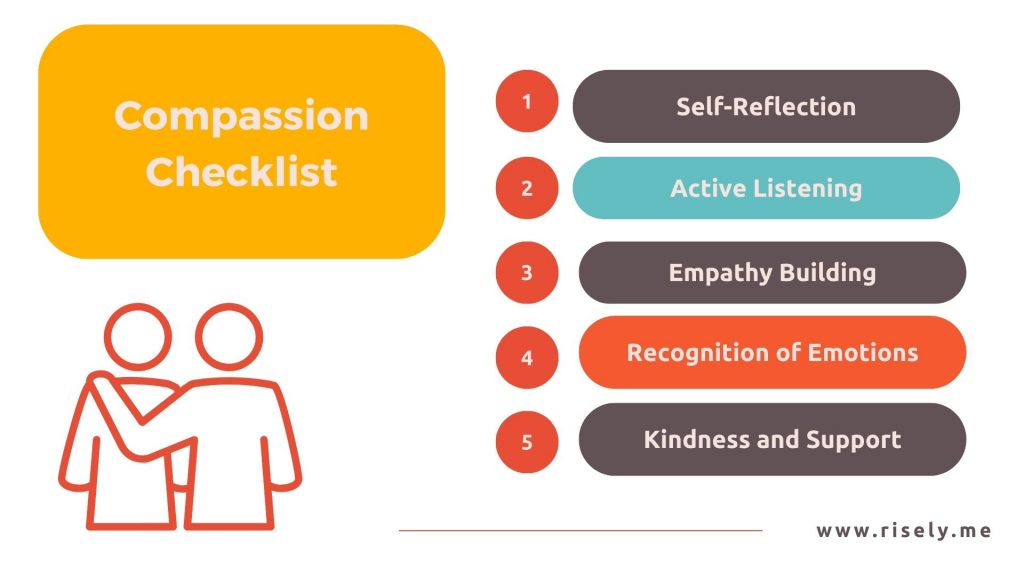
We’ve talked about the fantastic benefits of compassionate leadership, but how do you implement it? Well, fret no more because we’re here to equip you with the tools you need to become a compassionate leader and unlock the full potential of your team. Think of it as your personal “compassion playbook”:
A. Self-Awareness and Reflection: You must understand yourself before truly understanding your team. We all have biases and blind spots, and compassionate leadership starts with self-awareness. Take some time to reflect on your strengths and weaknesses and how your emotions might influence your interactions with others. Imagine a situation where you’re feeling stressed about a deadline. Being aware of this can help you communicate more patiently with your team instead of snapping under pressure.
B. Active Listening and Empathy: Great leaders are great listeners. Active listening is about truly paying attention to what your team members are saying verbally and nonverbally. Ask clarifying questions, make eye contact, and put away distractions. By showing that you care about their experiences, you build trust and create a safe space for open communication. Think about a time when you felt your boss wasn’t listening to your concerns. Not a great feeling, right? Compassionate leadership is all about making sure your team feels heard and understood.
C. Cultivating Emotional Intelligence: Our emotions are powerful, and compassionate leaders understand how to manage them effectively. Emotional intelligence allows you to recognize your own emotions and the emotions of others. Being able to regulate your emotions helps you respond with empathy and understanding rather than letting anger or frustration cloud your judgment. Imagine a team member coming to you feeling overwhelmed. By recognizing their emotional state, you can offer support and guidance instead of dismissing their concerns.
D. Leading with Kindness and Generosity: A simple act of kindness can go a long way. This leadership is about incorporating kindness and generosity into daily team interactions. A sincere thank you, a quick offer to help, or a small gesture of appreciation can make a big difference. For example, a handwritten note recognizing a team member’s hard work can brighten their day and boost morale. Small acts of kindness create a ripple effect of positivity throughout your team.
E. Providing Support and Recognition: Everyone needs to feel appreciated. Leaders take the time to acknowledge their team’s efforts and celebrate their achievements. Offer support and encouragement when things get tough, and recognize both big wins and small victories. Imagine a team member who exceeded a tight deadline. Publicly acknowledging their hard work shows your appreciation and motivates others to strive for excellence.
F. Setting Boundaries and Self-Care: You can’t be a compassionate leader if you are burnt out. Setting healthy boundaries and prioritizing self-care are essential for compassionate leadership. This means taking breaks, delegating tasks, and saying no when necessary. Don’t be afraid to ask for help when you’re feeling overwhelmed. Imagine a scenario where you’re constantly working late and neglecting your well-being. This will eventually impact your ability to lead with compassion. Caring for yourself gives you more energy and emotional bandwidth to support your team.
By incorporating these strategies into your daily practice, you’ll be well on your way to becoming a leader who inspires, motivates, and gets the best out of your team.
Overcoming Challenges in Compassionate Leadership
So you’ve embraced the power of compassionate leadership and are ready to dive in? Fantastic! But remember, becoming a compassionate leader isn’t always smooth sailing. Let’s tackle some common obstacles you might encounter and equip you with strategies to overcome them:
- Addressing Resistance: Change can be met with resistance, even positive change. Your team might be used to a different leadership style, or maybe the concept of compassionate leadership feels unfamiliar. Here’s how to navigate these situations:
- Open Communication is Key: Talk openly and honestly about your commitment to compassionate leadership with your team. Explain the benefits and address any concerns they might have.
- Start Small, Win Big: Don’t try to overhaul everything overnight. Start by incorporating small, compassionate changes, like actively listening to their ideas or offering flexible work arrangements.
- Lead by Example: Your actions speak louder than words. Be the embodiment of compassion in your interactions with your team members, and your enthusiasm will be contagious.
2. Handling Difficult Conversations: Difficult conversations are a reality of leadership. But with a compassionate approach, you can navigate them constructively and preserve trust. Here are some tips:
- Choose the Right Setting: Pick a private space for a focused conversation without distractions.
- Focus on the Behavior, Not the Person: Separate the action from the individual. Be clear about the specific behavior that needs to change, and avoid personal attacks.
- Listen with Empathy: Try to understand the other person’s perspective, even if you disagree. Acknowledge their feelings and show that you care.
- Focus on Solutions: Work together to find a solution that addresses the issue while respecting everyone’s needs.
Compassionate leadership isn’t about letting things slide or becoming a pushover. It’s about finding a balance between empathy and accountability. By addressing resistance head-on and compassionately navigating difficult conversations, compassionate leadership can create a more positive and productive work environment for everyone.
Conclusion
Compassion is the ability to feel and express empathy for another person. It’s not about pity or sympathy. It’s about having an understanding of another person’s point of view, where they are coming from, and what their needs are. Empathy is a big part of being compassionate, but it’s not enough on its own. We’ve written about some simple ways you can build compassion as a manager, but there are many more benefits that come with this trait. Stay tuned for more relevant information.