
An L&D director I know spent six months selecting and implementing a new digital learning platform. Custom-branded interface, curated content library, gamification features, the works. Three months after launch, usage had flatlined at 12%. The CEO asked why the company had spent six figures on a platform nobody used.
The answer wasn’t that the platform was bad. The answer was that the digital learning strategy behind it was built on three assumptions that turned out to be wrong: that technology would drive adoption, that a broad content library would serve everyone’s needs, and that “making learning available” would translate to “making learning happen.”
These are the same three mistakes most organizations make, and they’re all fixable once you see them clearly.
Mistake 1: No clear learning objectives
The most common failure point is treating “go digital” as the goal instead of the means.
When AI became the L&D conversation topic of 2024 and 2025, many organizations scrambled to add AI to their learning stack without first asking what learning outcomes they were trying to improve. “Use AI in our L&D programs” showed up as a goal in strategy documents. But that’s a technology goal, not a learning goal.
A learning goal looks like this: “Managers will demonstrate improved feedback skills, measured by a 20% increase in team member satisfaction scores within six months.” That goal can be achieved through AI coaching, workshops, peer practice groups, or some combination. The technology serves the goal, not the other way around.
What to do instead: Start every digital learning initiative with two questions. First, what should people be able to do differently after this? Second, how will we know if they can? If you can’t answer both clearly, you’re not ready to choose technology.
The specificity matters. “Learners will understand project management principles” is vague and unmeasurable. “Learners will create a project plan with clear timelines, milestones, and resource allocations” is specific and testable. Measuring learning outcomes requires goals that describe observable behavior, not abstract understanding.
The mantra for your next planning cycle:
Do: Use AI to achieve specific learning goals.
Don’t: Treat “Use AI” as a goal in your L&D strategy.
Mistake 2: Ignoring what your learners actually need
The second failure is designing digital learning for the organization chart instead of the people on it.
A team of field technicians who spend their days on job sites need something entirely different from a team of office-based analysts. The technicians need mobile-first, short-form content they can access between service calls. The analysts might prefer deep-dive online courses they can work through during dedicated learning time. Delivering the same digital learning experience to both groups guarantees poor engagement from at least one of them.
Before building anything, ask three questions about your learners:
- Tech comfort: Are they fluent with digital platforms, or will onboarding to the tool itself be a barrier?
- Time constraints: Do they have dedicated hours for learning, or are they squeezing it between packed schedules?
- Learning context: Are they working on skills they’ll apply immediately, or building capabilities for future roles?
The answers shape every design decision. A skills gap analysis tells you what to teach. Learner analysis tells you how to deliver it. Skip either one and your strategy has a blind spot.
One dimension that’s often overlooked is accessibility. Captions on videos, transcripts for audio, keyboard navigation, and alternative text for images aren’t nice-to-haves. They determine whether your digital learning reaches everyone or excludes people who should be included.
What to do instead: Interview 10 to 15 representative learners before committing to a delivery approach. Ask what’s worked for them in past learning experiences, what hasn’t, and what would make them actually want to engage with a digital program. The investment of a few hours prevents months of low-adoption frustration.
Mistake 3: Over-reliance on technology
Technology should improve the learning experience, not replace good instructional design. But the temptation to let shiny tools drive decisions is strong, especially when vendors demonstrate impressive features.
The question isn’t “what can this platform do?” It’s “what do our people need to learn, and which tools serve that specific need?” Sometimes the answer is an interactive simulation. Sometimes it’s a five-minute video. Sometimes it’s a coaching conversation. And sometimes the best tool isn’t digital at all.
For soft skills development, role-playing scenarios or coaching conversations are more effective than content consumption. For technical skills, interactive simulations where people practice in a safe environment beat lecture-style videos. For compliance, structured courses with assessments work well because the goal is verifiable knowledge, not behavior change.
What to do instead: Choose technology based on learning objectives, not feature lists. For each learning goal, identify the instructional method that best achieves it, then find the technology that supports that method. This inverts the typical process (evaluate platforms, then fit learning into them) and produces better results.
The quick diagnostic for your current strategy:
Your digital learning strategy is failing when:
- You don’t have clearly defined learning goals tied to business outcomes
- You haven’t investigated what your specific learners need
- You’re leading with technology choices instead of learning design
What does a strong digital learning strategy look like?
Now the constructive part. Four components separate strategies that work from those that generate impressive launch announcements and then quietly stall.
Clear connection between business goals and learning goals
Every digital learning initiative should trace back to a business outcome. Here’s an example of this chain in practice:
A retail chain wants to improve customer satisfaction ratings by 25% across 50 stores within six months. Analysis reveals three learning gaps: advanced customer service techniques, inconsistent service protocols, and uneven product knowledge.
The digital learning strategy responds with specific tools matched to specific needs:
- Mobile microlearning modules for quick product knowledge updates between shifts
- Virtual role-play scenarios for customer interaction practice
- Short video modules standardizing service protocols across all locations
Each tool was chosen because it fits both the learning need and the learner’s context (retail staff with limited training time, on their feet all day, accessing learning from store devices or personal phones).
Need help building yours? Download the free L&D strategy framework by Risely.
Real learner-centricity (not just the label)
Learner-centricity isn’t just “we designed this for employees.” It means people can access and apply learning without extra friction in their existing workflow.
This shows up in practical details. Is the platform mobile-responsive for people who learn on their commute? Does it send nudges at times when people can actually engage? Does it connect to the tools people already use daily?
For instance, Risely creates personalized learning journeys for people managers because their contexts and challenges can’t be lumped into a single program. Since managers are busy people with overflowing calendars, Risely uses microlearning and nudges to meet them where they are. AI coach Merlin is also available natively in Slack and Microsoft Teams, so coaching happens in the tools managers already live in.
Technology that meets learners where they are
The era of forcing people to log into a separate system for learning is ending. The platforms that work integrate into existing workflows.
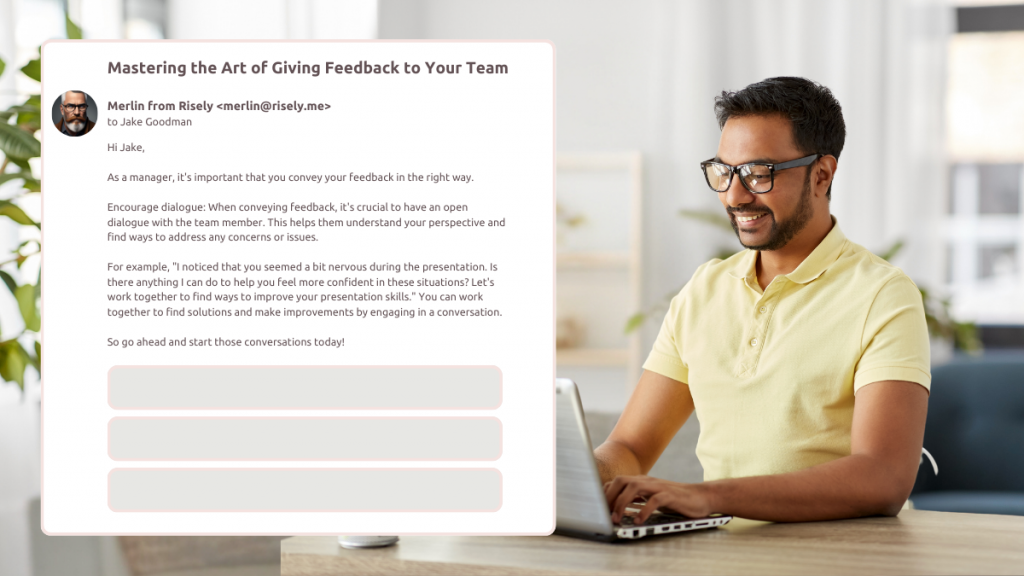
Risely’s approach to this includes:
- An interactive voice mode along with chat mode for coaching
- Support in 40 languages across both modes
- Custom integrations to include company values in coaching sessions
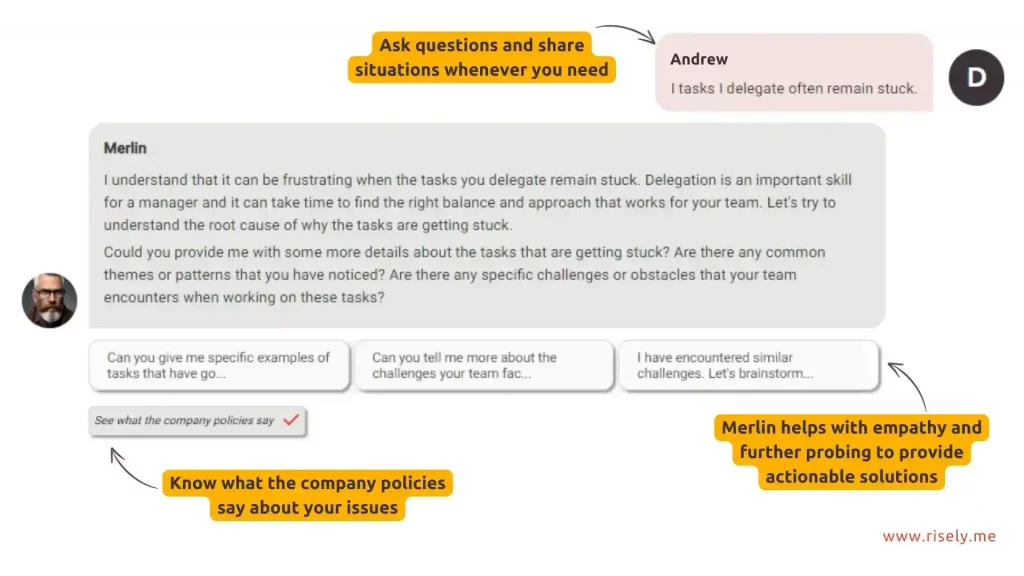
Voice mode turns out to be surprisingly valuable for coaching conversations. People often have thoughts and feelings about leadership challenges that are hard to type precisely but easy to express out loud. A quick voice note to your AI coach between meetings is much more natural than composing a written message.
Multiple language support matters too. The coaching industry is heavily concentrated in English-speaking regions, leaving everyone else at a disadvantage. When coaching works in someone’s primary language, the quality of reflection and self-awareness improves dramatically.
A maturity model for growing with your organization
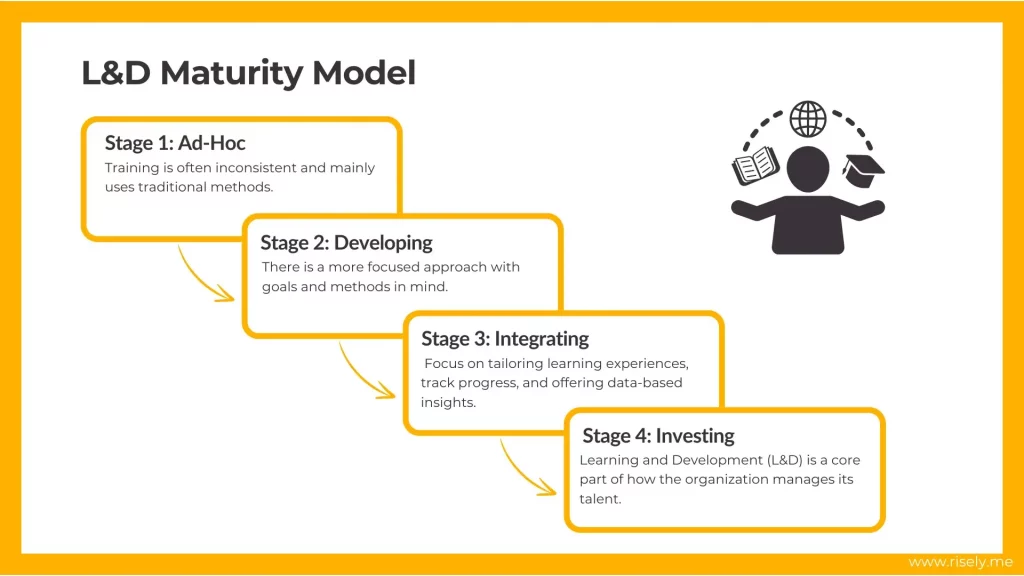
Not every organization needs the most advanced digital learning stack. Trying to jump from basic to advanced creates adoption problems, budget waste, and change fatigue.
A realistic maturity progression looks like this:
Phase 1: Ad-hoc digital adoption. Online courses appear here and there. Some tracking happens in spreadsheets. PDFs replace printed booklets. No central platform, no coordinated strategy. This is where most small organizations start, and that’s fine.
Phase 2: Standardized in key areas. Some departments have adopted digital learning systematically. Digital advocates emerge. Features start appearing in L&D strategy documents. There’s momentum but no organization-wide platform.
Phase 3: Centralized and data-informed. A central platform exists. Interactive learning options are available. Data from the platform informs decisions about learning and development initiatives. Most organizations should aim to reach and sustain this phase.
Phase 4: Strategic and innovative. Digital learning is deeply embedded in organizational culture. AI-driven personalization, advanced analytics, and continuous coaching are standard. The organization is a leader in how it develops people.
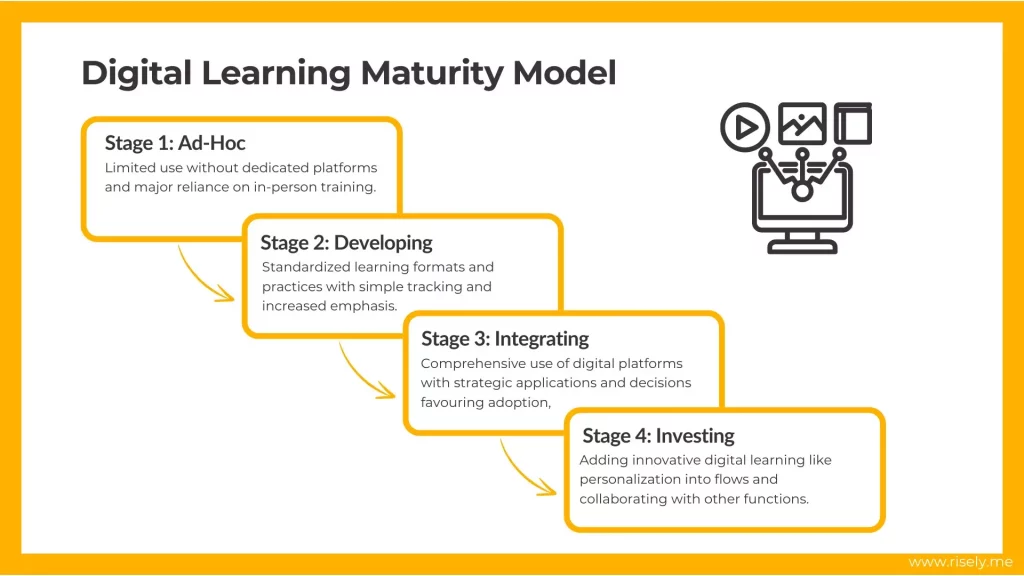
The practical lesson: assess where you are honestly, aim for the next phase (not the final one), and build on what’s already working. Resistance to new learning technology is normal, especially in the early phases. Meet people where they are, demonstrate value with small wins, and let success build appetite for the next step.
I discussed more ideas on the future of learning strategies in a recently recorded podcast with Inna Horvath:
Making your digital learning strategy work
The gap between a digital learning strategy that works and one that doesn’t usually isn’t budget or technology. It’s clarity. Clear goals. Clear understanding of your learners. Clear connection between the tools you choose and the outcomes you need.
Start with the three failure points above and honestly assess whether your current strategy avoids them. If it doesn’t, fix the foundations before adding new tools. A well-designed strategy with modest technology will outperform a poorly designed strategy with impressive technology every time.
The organizations getting the best results from digital learning right now share one trait: they think of technology as an enabler of good learning design, not a substitute for it. Get the design right first. Then let the tools amplify it.
Related reading: